- 24 sept., 2024
Comment créer un brief de campagne d'influence solide
Introduction
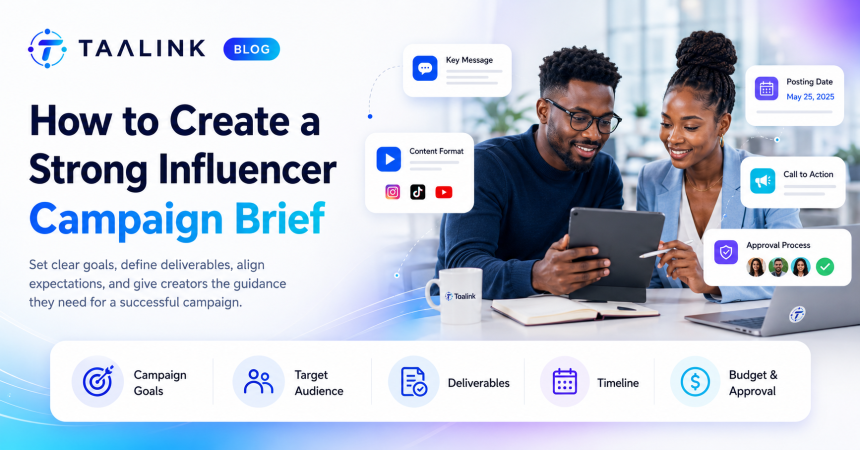
A successful influencer campaign starts with a strong brief. The campaign brief is the document or instruction that explains what the brand wants, what the influencer must deliver, and how the collaboration should work.
Without a clear brief, campaigns can become confusing. Creators may not understand the message. Brands may not receive the content they expected. Deadlines may be missed, and disputes may happen.
A good campaign brief helps both the brand and the influencer work with confidence.
Why a Campaign Brief Matters
Influencers are creative partners, but they still need direction. A campaign brief gives them the information they need to create content that matches the brand’s goals.
A strong brief helps avoid misunderstandings by clarifying:
What the campaign is about
Who the target audience is
What content should be created
When the content should be posted
What message should be included
What the brand expects from the creator
How payment and approval will work
When everything is clear from the beginning, the collaboration becomes smoother.
Start With the Campaign Objective
Every campaign should have a clear objective. This is the main result the brand wants to achieve.
The objective may be:
Increase brand awareness
Promote a product launch
Generate sales
Drive website visits
Increase app downloads
Promote an event
Grow social media followers
Collect leads
Educate the audience
Build trust around a service
The campaign objective guides every other part of the brief.
For example, if the goal is product awareness, the influencer may need to create educational or lifestyle content. If the goal is sales, the campaign may need a discount code, link, or strong call to action.
Describe the Brand Clearly
Creators need to understand the brand they are representing. A brief should explain:
What the brand does
Who the brand serves
What makes the brand different
What values the brand wants to communicate
What tone the brand prefers
What products or services are being promoted
This helps the creator produce content that feels aligned with the brand’s identity.
Define the Target Audience
A campaign is more effective when the influencer knows who the message is for.
The brief should describe the target audience by:
Age range
Location
Interests
Lifestyle
Needs or challenges
Buying behavior
Language preference
Income level, where relevant
Industry or professional group, where relevant
For example, a brand may want to reach young professionals in Abidjan, beauty lovers in Conakry, small business owners in Dakar, students in Lagos, or parents looking for educational services.
The clearer the audience, the stronger the content.
List the Deliverables
Deliverables are the exact content pieces the influencer must create.
These may include:
One Instagram reel
Three Instagram stories
One TikTok video
One YouTube mention
One Facebook post
One product review
One blog post
One live session
One unboxing video
One event appearance
A set of photos or videos for brand use
Each deliverable should include format, length, platform, and quantity.
A vague request such as “promote our product” is not enough. A clear request such as “create one 45-second Instagram reel showing how to use the product” is much better.
Provide Key Messages
Brands should tell creators what message they want people to remember.
For example:
This product saves time.
This service is affordable.
This app helps businesses grow.
This event is open for registration.
This platform connects brands and influencers.
This offer is available for a limited time.
Creators should be allowed to express the message in their own voice, but the main points should be clear.
Include Do’s and Don’ts
A brief should also explain what creators should avoid.
For example:
Do mention the launch date.
Do show the product clearly.
Do use the official hashtag.
Do include the website link.
Do speak in a natural tone.
Do not make medical claims.
Do not compare directly with competitors.
Do not use offensive language.
Do not change the logo.
Do not promise guaranteed results.
This protects the brand and helps the creator avoid mistakes.
Define Timeline and Approval Process
Deadlines are essential. The brief should explain:
When the creator should submit draft content
When the brand will review it
How many revisions are allowed
When the final content should be published
How long the content should remain online
When results should be shared
If approval is required before publishing, this must be clear.
Clarify Payment Terms
Payment terms should be agreed before the campaign begins.
The brief should clarify:
Payment amount
Payment method
Payment schedule
Conditions for payment release
Whether revisions are included
What happens if the campaign is cancelled
Whether usage rights require extra payment
Clear payment terms reduce tension and build trust.
Conclusion
A strong influencer campaign brief is one of the most important tools for campaign success. It helps brands communicate clearly and helps creators deliver better content.
When the brief includes objectives, audience, deliverables, timeline, messaging, and payment terms, both sides are better prepared.
Taalink helps brands and influencers collaborate more professionally by encouraging clearer campaign communication and structured partnerships.
Partager cet article
Dernier blog